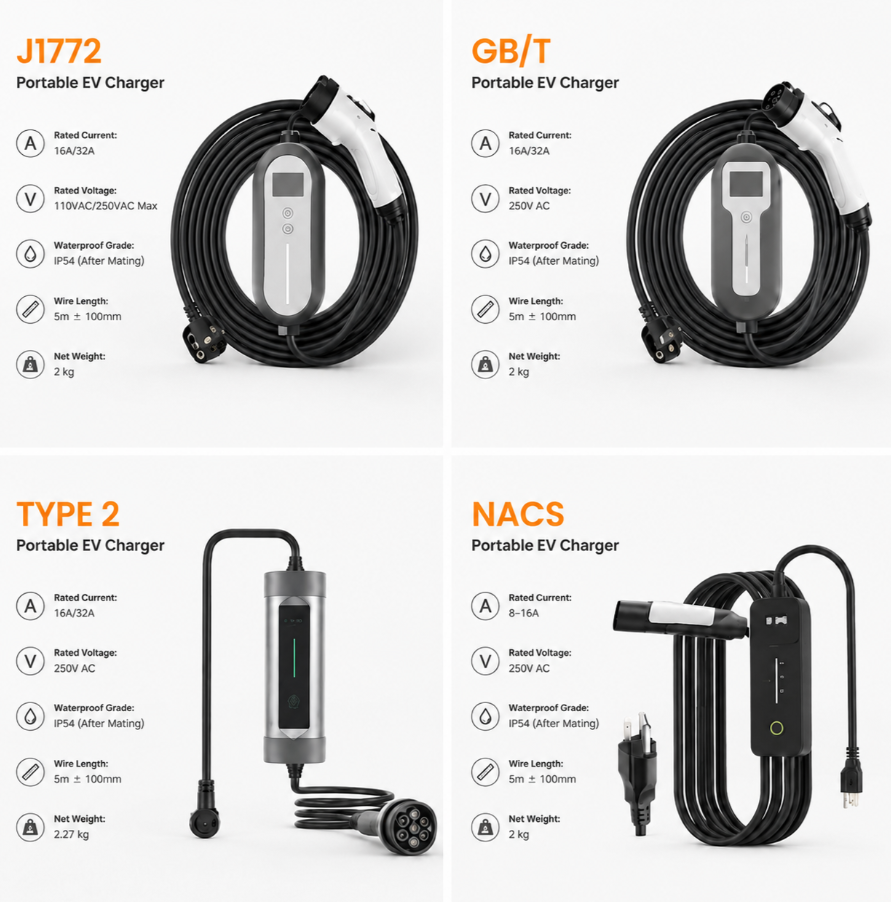
For a distributor, 7kW and 11kW are different electrical projects, not simple speed tiers. A 7kW class portable charger is commonly associated with a compatible single-phase supply, while an 11kW class normally needs a compatible three-phase supply. Stock only after confirming the destination market, input connection, vehicle AC acceptance and exact model evidence.
Who is this guide for?
This guide is for EVSE importers, overseas distributors and private-label brands deciding which portable charger configuration belongs in a regional range. The decision comes before the RFQ: you are choosing which customer problem the SKU should solve, which supply it expects and how much support the sales team will need.
What is the practical difference between 7kW and 11kW?
The practical difference starts with phase and site supply. A 7kW class AC project is typically discussed around a compatible single-phase circuit, while an 11kW class project is typically discussed around compatible three-phase service. The label alone does not prove usable charging power. Actual output remains limited by the supply, the EVSE setting, the cable and connector ratings, and the vehicle’s onboard AC charger.
Decision table
| Buyer question | 7kW class | 11kW class |
|---|---|---|
| Typical project direction | Compatible single-phase use | Compatible three-phase use |
| First evidence to request | Input, current, plug and model sheet | Phase, input, wiring role and model sheet |
| Vehicle check | Single-phase AC acceptance | Three-phase AC acceptance |
| Stocking risk | Wrong input plug or circuit assumption | Markets or vehicles without useful three-phase acceptance |
| Sales question | What supply and socket will be used? | Is three-phase supply available at the site? |
How should a distributor choose?
Start with the destination country and sales channel. Record the normal customer site, available phase, input connection and the vehicle-side connector family. Then choose representative vehicles and check their onboard AC charging acceptance. A customer may connect an 11kW EVSE to a vehicle that accepts less AC power; the charger cannot force the vehicle to take more.
- Define the market and installation context.
- Confirm single-phase or three-phase supply with the buyer or a qualified local professional.
- Confirm the input plug or fixed connection for the exact model.
- Check representative vehicle AC acceptance.
- Validate a sample and freeze the model revision before ordering.
What evidence should the supplier provide?
Ask for an exact model datasheet, product and label photos, input configuration, rated current, phase, cable information, operating instructions and the documents required for the destination market. Certification or test evidence must identify the applicable model and version. A report for a visually similar charger is not enough. For adjustable-current products, also confirm the available settings and what the display actually shows.
Common mistakes
The usual mistake is building the range around the largest power number. That creates avoidable returns when customers lack the required supply or when the vehicle cannot use the extra capacity. Another mistake is treating all “European plugs” or all Type 2 vehicles as one setup. The vehicle connector does not define the building supply or input plug. Keep those fields separate in the SKU record.
RFQ checklist
- Destination country and customer type
- Supply voltage and phase
- Input plug or connection
- Required current settings and power class
- Vehicle-side connector and representative vehicles
- Cable length and operating environment
- Display, language, label and packaging needs
- Sample, document and revision approval plan
Related product and next step
Review the portable EV charger range and the 16A vs 32A portable charger guide. Send the destination market, equipment role, electrical conditions, required configuration and order stage through the quotation form for a model-specific review.
FAQ
Is an 11kW portable charger always faster than a 7kW model?
No. The supply, EVSE and vehicle must all support the higher three-phase AC power.
Can a Type 2 vehicle automatically use 11kW?
No. Type 2 describes the connector family; onboard AC charging capability is vehicle and version specific.
Should a distributor stock both?
Only when the target market contains verified customer groups for both supply conditions and the team can explain the difference clearly.