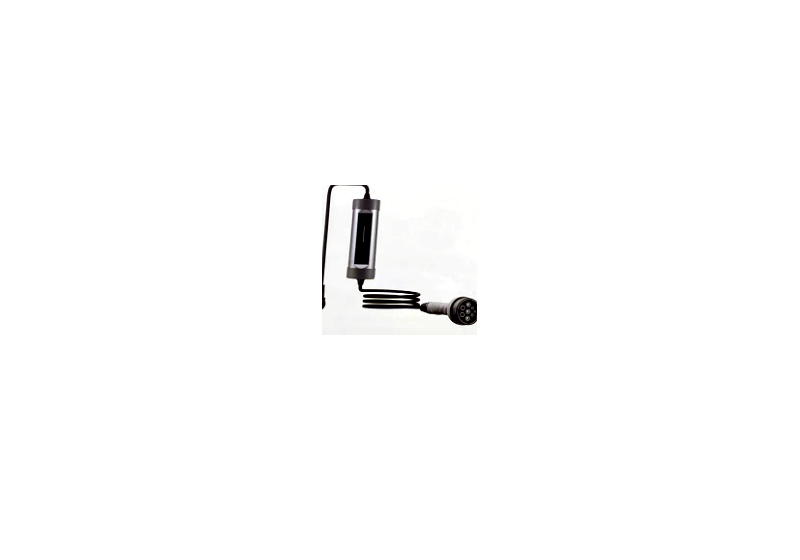
A Type 2 charging cable and a portable EV charger do different jobs. A cable connects a vehicle to compatible charging equipment that already provides the EVSE control function. A portable charger includes the in-cable control equipment and connects an appropriate power source to the vehicle. Choose by identifying the source equipment first, then the connector ends, phase, current and local installation limits.
Who is this guide for?
This comparison is for distributors, installers and project buyers who receive vague requests such as “I need a Type 2 charger.” Before quoting, identify whether the customer already has a charging station or only has an appropriate power outlet. That one question usually separates a charging cable request from a portable EVSE request.
What does each product do?
A Type 2 charging cable is normally a connection assembly used between compatible charging equipment and a vehicle. The charging station supplies the control and protection functions for that installation. A portable EV charger, often called portable EVSE, includes an in-cable control box and is supplied from an appropriate input connection. These are equipment roles, not interchangeable product names.
Decision table
| Question | Type 2 charging cable | Portable EV charger |
|---|---|---|
| What is at the source? | Compatible charging station or outlet | Appropriate electrical supply/input connection |
| Where is EVSE control? | In the charging equipment | In the portable control unit |
| Main selection fields | Connector ends, phase, current, length | Input, phase, current, vehicle connector, length |
| Typical buyer risk | Wrong end configuration or rating | Wrong supply, plug or unsupported use |
| Evidence | Exact cable model and end views | Exact EVSE model, input and instructions |
How do you identify the right product in four steps?
First, ask the customer to photograph or name the power source without guessing from the country. Second, identify the vehicle inlet and market version. Third, record current, phase, length and the environment. Fourth, ask whether the product needs to travel with the driver, stay at a site or serve as replacement stock.
- Identify the source equipment and its connector or outlet.
- Identify the vehicle inlet and charging mode.
- Confirm phase, current, cable route and storage.
- Match the exact product role and validate a sample.
Which parameters must be confirmed?
For a Type 2 cable, confirm both connector ends, single-phase or three-phase construction, current rating, length, jacket requirements and any locking or termination details. For portable EVSE, add the input plug or connection, adjustable-current settings, control-box functions and instructions. Do not infer a safe input from a marketing power number. Site suitability belongs to the local electrical assessment.
Common mistakes
One common error is quoting a Type 2 to Type 2 cable to a buyer who only has a wall outlet. Another is quoting portable EVSE when the project asks for a replacement tethered cable assembly for charging equipment. Photos help, but the buyer should still provide equipment labels or model information. Also avoid using “charger,” “gun” and “cable” as if they describe the same role.
Evidence and RFQ checklist
- Destination market and use location
- Source equipment, outlet or charging-station model
- Vehicle inlet and representative vehicle version
- Connector at each end
- AC phase, current and target power class
- Cable length, route, storage and environment
- Exact model datasheet and photos
- Sample validation and revision record
Related product and next step
Review the Type 2 charging cable range and the portable EV charger selection guide. Send the destination market, equipment role, electrical conditions, required configuration and order stage through the quotation form for a model-specific review.
FAQ
Can a Type 2 charging cable plug directly into a household outlet?
No. A standard Type 2 charging cable is intended for compatible charging equipment; a portable EVSE has a different role and input arrangement.
Does Type 2 mean three-phase?
No. Type 2 products can be configured for different phase and current requirements; verify the exact assembly.
Which product is better for travel?
A portable EVSE may suit travel only when its input and use conditions are appropriate for each destination. Confirm local electrical requirements.